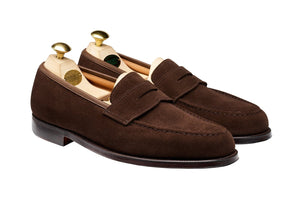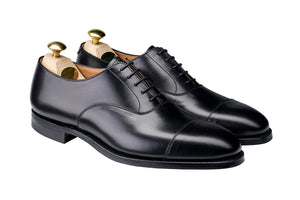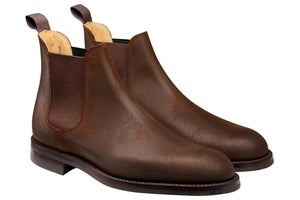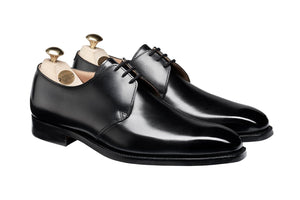





Terry's Cafe, no accent of the ‘e’, is a spit-and-sawdust sort of greasy spoon in South East London. It’s not far from my office, so occasionally I treat myself, mostly when I’m hungover. Terry opened his cafe in 1982, having worked as a butcher at Smithfield meat market just across the river. Today, its checkered red-and-white tablecloths are laid out by his son, Austin, a snappily-dressed cockney who sounds like Ray Winston and looks like Heston Blumenthal. Austin recently posted something on Instagram.
‘We see reviews all the time saying, “Loved the cafe, great food and service – just a bit pricey.” And we totally get where that comes from. But if we want proper, independent places – not chains and microwaves everywhere – then here’s the truth… Quality ingredients cost more… London living wage (and proud to pay it) … Energy & rent in SE1… Inflation across every supplier… 20% VAT before we even start… If we want businesses like ours to keep serving proper British food, looked-after staff, and local produce… then the government needs to back us.’
It’s a damning indictment of modern society – heartbreaking, really – that independent retailers are disappearing from UK high streets at the rate of 37 a day. My favourite restaurant, Simpson’s Tavern in the City of London, went merrily along for 265 years before a Bermuda-based investment company bought the lease and pulled the plug. Prior to my old man and I making it our Christmas tradition, former patrons included Charles Dickens, Samuel Johnson, William Thackeray, Benjamin Disraeli, Robert Peel, Charles Lamb and, a little more recently, Stephen Fry, Michael Caine and John Cleese (now there’s a dinner party). The last time I passed the Grade II-listed building, its doors were padlocked and its windows smashed. Merry Christmas everyone!
In the UK, the statistics will tell you (not that you need them to), we’ve gotten increasingly bad at a number of things. Growing productivity. Improving living standards. Looking after the sick. Teaching our kids. Putting criminals in prison. And keeping them there, as a couple of chaps from HMP Wandsworth will tell you. One thing we’ve not lost our enthusiasm for, is flogging the family silver. That, we’ve become particularly good at.
Seen something of national significance that’s tickled your fancy? It’s yours – as long as the price is right. Historic estates, culturally-important buildings, the utility companies that are meant to keep our energy prices capped and our rivers clean, airports, newspapers, train operators, even, in the case of Littlebredy in Dorset, our villages (snapped up in 2024 by investment firm Belport Limited, which wasted no time in evicting longstanding residents). All this, it seems, while developing a collective blindness to that which should be regarded as precious, and ringed-fenced. Our creative industries, our hospitality scene, and what’s left of our still internationally-revered manufacturing sector, three obvious areas in which we overachieve.
Other places get the whole self-promotion thing. Switzerland is a brand, as much as a country. Italy has la dolce vita. France has je ne sais quoi. The United States, while locked in its own chains-and-microwaves death spiral, still holds out ‘the American Dream’. Britian’s national motto is ‘mustn’t grumble.’ We ‘keep calm and carry on’. But, in the case of our manufacturing industries, for how much longer?
Another Instagram post, this time by James Eden, founder and CEO of Private White V.C., a Manchester-based outerwear authority that is to handmade coats, what Crockett & Jones is to Goodyear-welted shoes. ‘Here’s a question,’ Eden recently pondered. ‘Why does the rest of the world seem to value British craftsmanship more than we do ourselves?... Over 70 per cent of our sales are now overseas… In the store this weekend, I had customers from Mexico, Manhattan, Switzerland and Paris. All coming to see how we make our coats… Why do we, as a nation, talk down what others admire so much? The world believes in British craft. Maybe it’s time Britain did too.’
Independent retailers are no longer a thing in Manhattan, where the suffocating tenacles of private equity have a tighter stranglehold than anywhere else. Only the biggest brands, protected within the portfolios of even bigger backers, can afford the leases. Yet there is one family-run firm still putting up a fight. You’ll find it at 11 East 55th Street, between Madison and Fifth Avenue, and again at 156 Spring Street, SoHo. “Many of our clients can’t believe that after 146 years, Crockett & Jones is still in the hands of its founding family,” says Jonathan, who helped set up the shoemaker’s first stateside store in 2010.
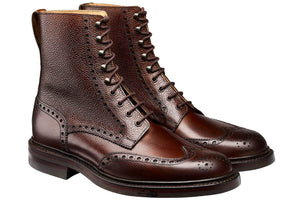
“We serve a hugely international clientele,” explained Jonathan, when I spoke to him earlier this year. “We have a big Latin American customer base, but we get lots of Japanese clients, too, even some Australians.” Jonathan has visited Crockett & Jones’ Northampton factory several times. “Whenever I go, I wish I could take our customers with me, so they could see firsthand the commitment and dedication that goes into our shoes.”
Stepping into 27 Perry Street, a redbrick, Grade II-listed factory that emerges from rows of neatly-packed Victorian terrace houses in inner-city Northampton, is like going back in time – which I mean not in the antiquated provincial sense, but in the most positive way (funny how the sentiment of that phrase has flipped meaning, although funny for who, I’m not sure). Crockett & Jones moved into the building in 1891, twelve years after the company was founded. In that time, the shoemaker has weathered World Wars, the influx of cheap, foreign-manufactured footwear, changing sartorial norms, fast fashion, the fallout from Covid-19, and the fact that very few people are still required to wear smart shoes to work (if they go to the office at all). According to James Fox, Crockett &Jones’ Marketing & E-commerce Director, who entered the family firm through his marriage to Export Sales Manager Philippa Jones (fifth generation), things aren’t getting any easier.
“Business is hard,” says Fox. “Manufacturing is becoming almost impossible for self-funded limited companies like us. That’s not an attack on corporate, but I think it’s important to highlight the special nature of what businesses like Crockett & Jones are continuing to achieve while our government makes it harder and less attractive to do business in the UK.”
Crockett & Jones could easily outsource parts of its production process. Of the 380-plus people employed by the company, more than a quarter work in the closing room (where a shoe’s upper is constructed before being attached to a sole). Those jobs could be subcontracted abroad, the uppers shipped back, sewn to a sole, and the shoes still stamped with the words ‘Made in England’ (only 50 per cent of a product’s production cost needs to occur within the UK for it to carry that label). It’s a strategy plenty of other shoemakers have followed. It’s a path Crockett & Jones has fiercely resisted.

“Crockett & Jones does business the old-fashioned way,” says Fox. “We always have the end consumers in mind and seldom make decisions based on short-term profit. We focus heavily on the quality of product and invest in our people, our factory and the streets around it. But with increases to National Insurance contributions, minimum wage increases, statuary rights for employees from day one, corporation tax rises, and business rate increases, thinking long-term is becoming a real challenge. For businesses in the UK, it’s just one issue after another. It’s relentless.”
During my most recent visit to Crockett & Jones’ home in Northampton, I met Gaynor Roberts. Gaynor began working for the company when she was 16. Thirty-eight years later, she’s now supervisor of the closing room. “I had a couple of months off in 1987,” she told me, “when I had my son.” Gaynor has eight sisters. At one point, five of them worked in the factory, as did their mother and a number of their husbands. Several staff members have been with the company for more than 40 years. A few have rung in 50.
After being shown how Crockett & Jones stills applies a layer of cork to the cavity between its uppers and welts – a costly procedure that very few shoemakers bother with anymore – I spoke with Managing Director Jonathan Jones. When his father started working for the family business, not long after the Second World War, there were around 50 shoe factories in Northampton, Jonathan told me, plus a further 300 or so scattered across the wider county. Now there are five in town, and a handful in Northamptonshire at large.
“If you know your shoes,” said Jonathan, “the words ‘Made in England’ will have meaning. British manufacturing has always been associated with high-quality goods, skilled craftsmanship, and products that are built to last. It’s becoming increasingly difficult to operate as a labour-intensive business, but Crockett & Jones intends to keep that association going.”
I’m meeting an old pal next week. “Heard of Terry’s?” I asked, when we were choosing a spot. “Course mate, we’ve just booked it for our wedding reception.’
Perhaps there’s hope.
(News just in! Simpson’s Tavern, while still locked in a legal battle, looks set to reopen – might the world be healing?)